Business Analytics Tools: How Small Businesses Are Using Data and Analytics to Make Better Decisions
Running a small business has always required balancing multiple responsibilities. Owners often manage sales, customer service, finances, marketing, inventory, and operations all at once. With so many priorities competing for attention, making the right decisions quickly can determine whether a business grows steadily or struggles to keep up. While experience and intuition remain valuable, relying on assumptions alone is becoming increasingly risky in today’s competitive market.
That is why data has become one of the most precious resources that companies big and small can have. Thanks to modern technologies, even small businesses have access to data about their customers, sales, expenses, marketing campaigns, and business performance. Rather than guessing about customers’ preferences and profitable products, company owners are able to see statistics before making any decisions. Such business analytics tools can be bought by any company without a need to have a huge budget and specialists in the field.
Moreover, companies have realized that to be successful one should be aware of certain patterns rather than react to separate events. Taking a look at the trends that were observed for several weeks, months, or even years, company owners will be able to detect certain opportunities and avoid any mistakes. No matter what the goal of the owner is; earning more money, providing better customer satisfaction, or cutting down expenses; having reliable information makes it much easier to plan.
Why Data Has Become Essential for Small Businesses
Not long ago, the accounts of small companies used to be recorded in the form of notebooks or spreadsheets, which would only get looked into when the time for taxation was near. Decisions related to inventory, personnel management, or marketing activities were based on an individual’s judgment instead of tangible data. Although personal experience still matters, the current market requires quick and effective decision-making.
The use of data helps managers understand what is really going on without any presumptions. Sales statistics point out the most efficient products, while the data about customers helps track the buying habits, and the financial statements show how the company spends its money. In other words, the data provides a lot of useful information to help understand the strengths and weaknesses of a business before they create serious trouble.
Understanding the Different Types of Business Data
Each business collects information as part of its day-to-day operations. Transactions, inquiries, invoices, inventory, website traffic, online reviews, and results from marketing campaigns provide a lot of useful data. While on their own, such statistics might not look very important, taken together, they give a thorough understanding of how the business works and what areas should be improved.
Financial data allows tracking the business profits and cash flow. Data about customers provides an insight into their buying behavior and preferences. Campaigns performance is measured using marketing data; operational data reveals how efficient particular departments work. All this data taken together gives a much clearer understanding of the business than separate departments’ performances.
Moving Beyond Guesswork
Many business owners spend years in the same industry, and their instinct often enables them to make quick decisions. However, as the company grows, it gets increasingly difficult to depend entirely on such an approach. Customers’ needs and expectations change, competition comes up with something new, and the situation on the market changes too rapidly. Decisions that used to bring success might prove ineffective today.
Decision making that combines information and experience is better. For instance, a business owner might feel sure that one product is very popular since many customers keep asking about it. The statistics of sales might show that another product brings much more money through the whole year. Business owners would be able to distribute their resources much more efficiently.
Improving Customer Understanding Through Analytics
Customers hardly ever buy goods or services spontaneously. Through experience, customers build habits, tastes and expectations. Knowing all about that makes it possible for companies to offer products that meet these criteria and to form better connections with their clients. Only by using data will one be able to see patterns, instead of assuming.
Firms will be able to assess how often customers buy things, their buying seasonality, preferred methods of payment, customer feedback and purchase frequency. This will help to discover loyal customers, find out why some customers come back, and find out what goods appeal to different customer segments. It is not necessary to use the same marketing campaigns for all customers.
Customer analysis will also allow firms to improve service. Complaints about slow delivery or slow reaction will show that there is something wrong and that managers need to look into the company’s operations before the situation gets even worse. Of course, positive trends should be taken into consideration as well.
Making Better Financial Decisions
Financial management remains one of the biggest challenges for small businesses. Even companies with strong sales can experience difficulties if expenses are poorly controlled or cash flow is inconsistent. Understanding financial information in real time allows owners to make adjustments before problems become serious.
Revenue reports, expense tracking, profit margins, outstanding invoices, and operating costs provide a clear picture of business health. Instead of reviewing financial statements only at the end of the month, owners can monitor performance regularly and respond quickly to unexpected changes. This helps prevent overspending while supporting smarter investment decisions.
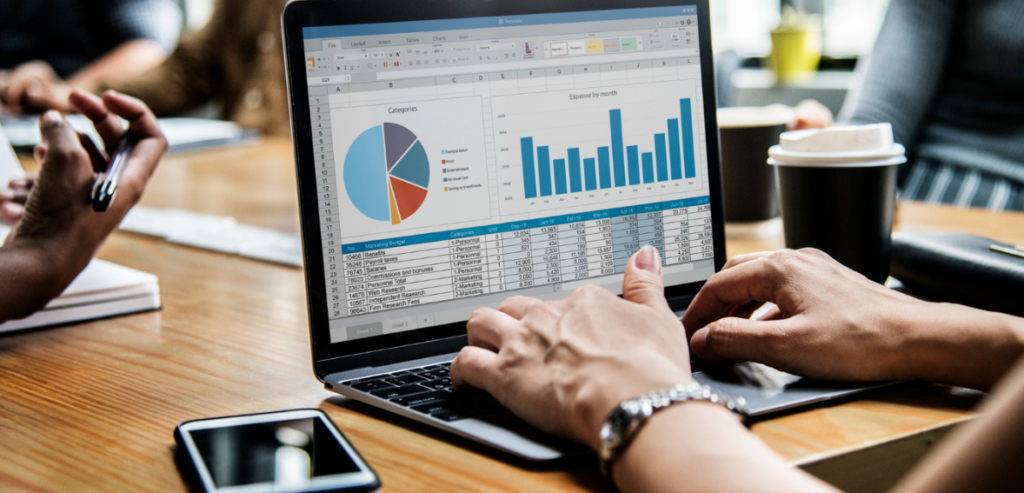
When financial information is organised using small business reporting software, important trends become easier to understand. Visual dashboards simplify complex numbers, allowing owners to focus on improving profitability rather than spending hours compiling reports manually.
Using Sales Data to Increase Revenue
Sales information reveals much more than total income. It shows which products sell consistently, which locations perform better, which sales channels generate the highest revenue, and how customer demand changes throughout the year. Understanding these patterns helps businesses maximise opportunities while reducing waste.
For example, a retailer may discover that certain products sell exceptionally well during specific seasons. Instead of ordering inventory evenly throughout the year, purchasing decisions can align with anticipated demand. Similarly, service providers may notice that enquiries increase during particular months, allowing them to schedule staffing accordingly.
Sales analysis also helps identify underperforming products that consume valuable inventory space without generating meaningful revenue. Rather than continuing to invest in slow-moving items, businesses can introduce new offerings that better match customer preferences.
Improving Marketing Performance
Marketing consumes valuable time and money, making it essential to understand which activities deliver measurable results. Without proper analysis, businesses may continue investing in campaigns that produce little return while overlooking more successful opportunities.
Website traffic, email campaigns, social media engagement, online advertising, referral sources, and customer acquisition costs all provide useful marketing insights. By comparing these metrics, businesses can identify which channels generate genuine customer interest rather than simply attracting website visitors.
Modern business analytics tools make marketing evaluation much simpler by combining data from multiple platforms into one dashboard. Owners can compare campaign performance, monitor conversion rates, and adjust budgets based on measurable results instead of assumptions. This leads to more effective marketing strategies and improved return on investment.
Managing Inventory More Efficiently
Inventory management directly affects profitability. Excess stock ties up cash and storage space, while insufficient inventory results in missed sales and dissatisfied customers. Finding the right balance requires accurate information rather than estimates.
Sales history helps predict future demand with greater accuracy. Businesses can identify seasonal fluctuations, monitor fast-moving products, and reduce purchases of items that rarely sell. Inventory reports also highlight products approaching expiry dates or remaining unsold for extended periods.
Accurate inventory data reduces unnecessary purchasing while improving product availability. This creates healthier cash flow because money remains available for other investments instead of sitting in unused inventory. Businesses also minimise waste and improve customer satisfaction by maintaining appropriate stock levels.
Enhancing Employee Productivity
Employees contribute significantly to business success, making workforce management another area where analytics provides valuable insights. Measuring productivity helps identify opportunities for improvement while recognising high-performing team members.
Businesses can monitor project completion times, customer service response rates, sales performance, attendance patterns, and workload distribution. Rather than evaluating employees solely through observation, managers gain objective information that supports fair performance discussions.
Analytics can also reveal operational bottlenecks. If one department consistently experiences delays while another has unused capacity, workloads can be adjusted accordingly. This improves efficiency without necessarily increasing staffing costs.
Understanding Business Performance Through Dashboards
Business owners often receive information from multiple sources, including accounting software, sales systems, websites, marketing platforms, and customer databases. Reviewing separate reports consumes valuable time and makes it difficult to understand overall business performance.
Dashboards solve this problem by presenting important metrics in one location. Revenue, expenses, customer growth, inventory levels, marketing performance, and operational indicators become easier to monitor simultaneously. Rather than searching through multiple reports, owners can quickly identify areas requiring attention.
Many modern business intelligence tools provide customisable dashboards designed specifically for small businesses. These platforms simplify reporting while helping owners focus on meaningful performance indicators instead of overwhelming amounts of information.
Supporting Faster Decision Making
Business opportunities often require quick responses. Whether adjusting prices, introducing new products, or responding to changing customer demand, delayed decisions can result in missed opportunities.
Access to current information allows businesses to respond confidently because decisions are supported by measurable evidence. Instead of waiting weeks for manual reports, owners can review updated figures whenever necessary. This flexibility becomes especially valuable during seasonal changes, promotional campaigns, or unexpected market shifts.
Faster access to reliable information also improves communication among managers and employees. Everyone works from the same data, reducing misunderstandings and encouraging more consistent decision-making across the organisation.
Using Cloud Technology for Better Accessibility
Many businesses no longer store information on a single office computer. Cloud-based systems provide secure access from multiple locations, allowing owners and employees to review important information wherever they are working.
Modern cloud analytics platforms automatically collect and organise information from connected business systems. Reports update continuously, eliminating the need for manual data entry while reducing the likelihood of human error. Owners travelling between locations or working remotely can monitor business performance without visiting the office.
Cloud solutions also simplify collaboration. Accountants, managers, and business owners can access the same information simultaneously, improving communication and supporting faster business decisions.
Identifying Growth Opportunities
Growth rarely happens by chance. Successful expansion usually begins with understanding existing performance before investing additional resources. Analytics helps businesses recognise opportunities supported by measurable evidence rather than optimism alone.
Customer demand may indicate opportunities for new products or services. Sales data can reveal regions with growing interest, while marketing reports highlight audiences responding positively to advertising campaigns. Financial analysis ensures expansion plans remain financially sustainable instead of creating unnecessary risks.
Businesses using business intelligence tools often discover opportunities hidden within existing operations. Improving customer retention, increasing average order values, or expanding successful product categories may generate greater returns than entering entirely new markets.
Reducing Business Risks
Every business faces uncertainty. Economic conditions, changing customer preferences, supplier disruptions, and competitive pressures create ongoing challenges. While analytics cannot eliminate every risk, it helps businesses recognise warning signs earlier.
Declining sales, increasing operational costs, rising customer complaints, or falling website traffic become visible through regular reporting. Early identification allows businesses to investigate causes before problems become severe. Instead of reacting during a crisis, owners can implement gradual improvements that minimise disruption.
Risk management also benefits from historical analysis. Understanding how previous decisions affected business performance helps owners avoid repeating costly mistakes while improving future planning.
Building a Culture That Values Information
Technology alone does not create better businesses. Success depends on encouraging employees and managers to use information when making everyday decisions. Building a culture that values evidence encourages continuous learning and improvement throughout the organisation.
Employees should understand why information matters and how their work contributes to business performance. Sales teams benefit from customer insights, marketing departments improve campaigns through performance analysis, and operations staff identify efficiency improvements using measurable data.
When everyone understands the value of accurate information, businesses become more adaptable. Decisions become consistent, communication improves, and long-term planning gains stronger support from the entire organisation.
Overcoming Common Challenges
Many small businesses hesitate to adopt analytics because they believe implementation will be expensive or technically difficult. Others worry about collecting too much information without understanding how to use it effectively. These concerns are understandable, but modern solutions have become significantly more accessible.
Starting with a few important performance indicators often delivers the greatest value. Revenue growth, customer retention, operating expenses, and marketing performance provide meaningful insights without overwhelming business owners. As confidence increases, additional reports and metrics can be introduced gradually.
Choosing user-friendly small business reporting software also simplifies adoption. Many platforms provide visual reports, automated updates, and guided dashboards that require minimal technical knowledge. Combined with reliable cloud analytics platforms, businesses can access valuable insights while keeping implementation costs manageable.
The Future of Data in Small Business
Technology continues evolving rapidly, making analytics more powerful and accessible each year. AI, automation, and predictive analysis are becoming integrated into everyday business applications, allowing even smaller organisations to benefit from advanced capabilities.
Future systems will increasingly recommend actions instead of simply presenting information. Businesses may receive automatic suggestions about inventory purchases, marketing budgets, staffing requirements, or customer engagement strategies based on historical performance and current trends.
Despite these technological advances, the purpose remains unchanged. The goal is not to replace human judgment but to support better thinking with reliable evidence. Businesses combining experience with accurate information will continue making stronger data driven decisions while adapting more effectively to changing market conditions.
Conclusion
Small businesses no longer need enormous budgets or dedicated analytics departments to benefit from data. Affordable technology has made meaningful insights available to organisations of every size, allowing owners to understand customers, improve operations, manage finances, and plan confidently for future growth.
The combination of business analytics tools, small business reporting software, business intelligence tools, and cloud analytics platforms has transformed the way businesses operate. Instead of relying solely on intuition, owners can use measurable information to support smarter planning and continuous improvement. As markets become increasingly competitive, organisations that embrace data driven decisions will be better positioned to improve efficiency, strengthen customer relationships, and achieve sustainable long-term success.